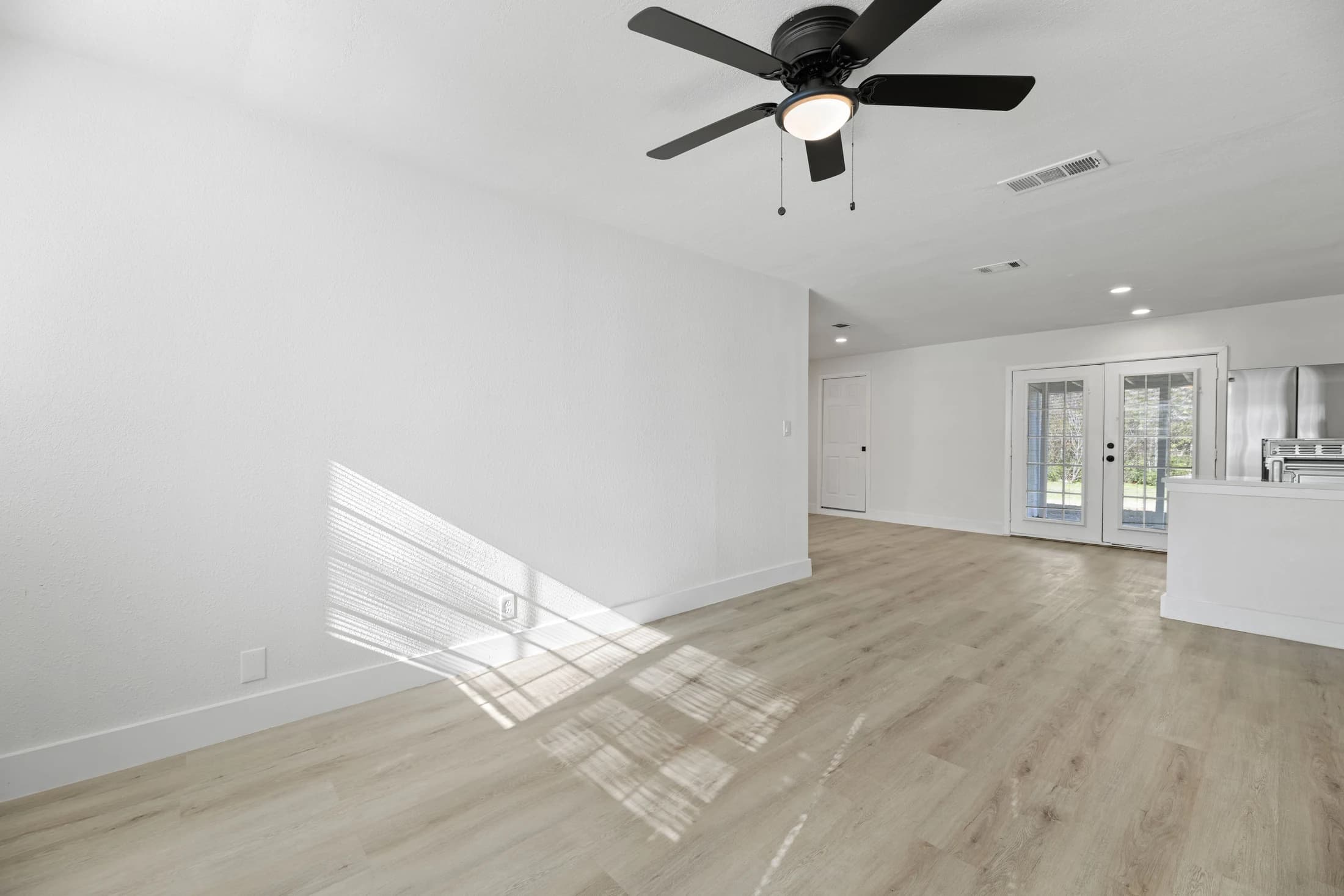
There is no single best flooring material for every home. Compare specific products against moisture exposure, traffic, maintenance, comfort, substrate requirements, and transitions. The full installation scope matters as much as the surface you choose.
Start with the room, not a ranking
A floor that suits a bedroom may not be the right choice for a shower area. A product that looks perfect in a showroom may feel different under the lighting or activity of your living room. First identify where the floor will go, how it will be used, and what the existing substrate can support.
Separate appearance preferences from performance requirements. Wood tone, pattern, and plank size are useful choices after you understand product suitability and installation conditions. Compare the actual products on your shortlist rather than assuming every option within a category behaves the same way.
Compare the questions each material raises
For tile, discuss the substrate, layout, joint pattern, transitions, and comfort preferences. For luxury vinyl, review the product’s installation restrictions, temperature and moisture requirements, care guidance, and how it can be repaired. For engineered wood, consider the construction, installation method, indoor conditions, and future maintenance options.
A sample gives you a visual reference but not the full product specification. Keep the manufacturer’s installation and care documents with your selections. Avoid treating a marketing label such as “waterproof” as a promise about the entire room assembly.
Make preparation visible in the estimate
Existing surfaces can conceal unevenness, moisture, or other conditions that affect the installation. Ask which checks will be completed, what preparation is included, and how anything discovered after removal will be approved.
For wood flooring, both the flooring and substrate moisture conditions are relevant to installation planning. A fixed waiting period alone does not establish that the jobsite is ready.
Review the floor as part of the whole home
Place samples beside cabinets, furniture, and retained surfaces. Think about transitions, door clearance, and the path between rooms. If the kitchen is being remodeled, coordinate the flooring approach with fixed cabinetry and appliance openings.
A useful comparison includes the complete installed scope: removal, preparation, materials, transitions, installation, and cleanup. That is a more practical basis for a decision than the price printed beside a sample.
A few more answers
Is engineered wood always suitable over a concrete slab?
Suitability depends on the specific product, slab condition, moisture, and the approved installation system. Assess the property and follow the manufacturer’s instructions before deciding.
Further reading
Explore the next step
Learn about flooring installation, or find your DFW service area.
This planning guide was prepared with AI assistance. It provides general homeowner information, not a property inspection, quote, or project-specific specification. Product instructions and the assessed conditions should guide actual work.