A bathroom plan should consider how moisture is managed and where humid air goes, alongside the visible fixtures and finishes. Identify existing ventilation conditions and the responsibilities for any specialist work before construction.
Look beyond the finished image
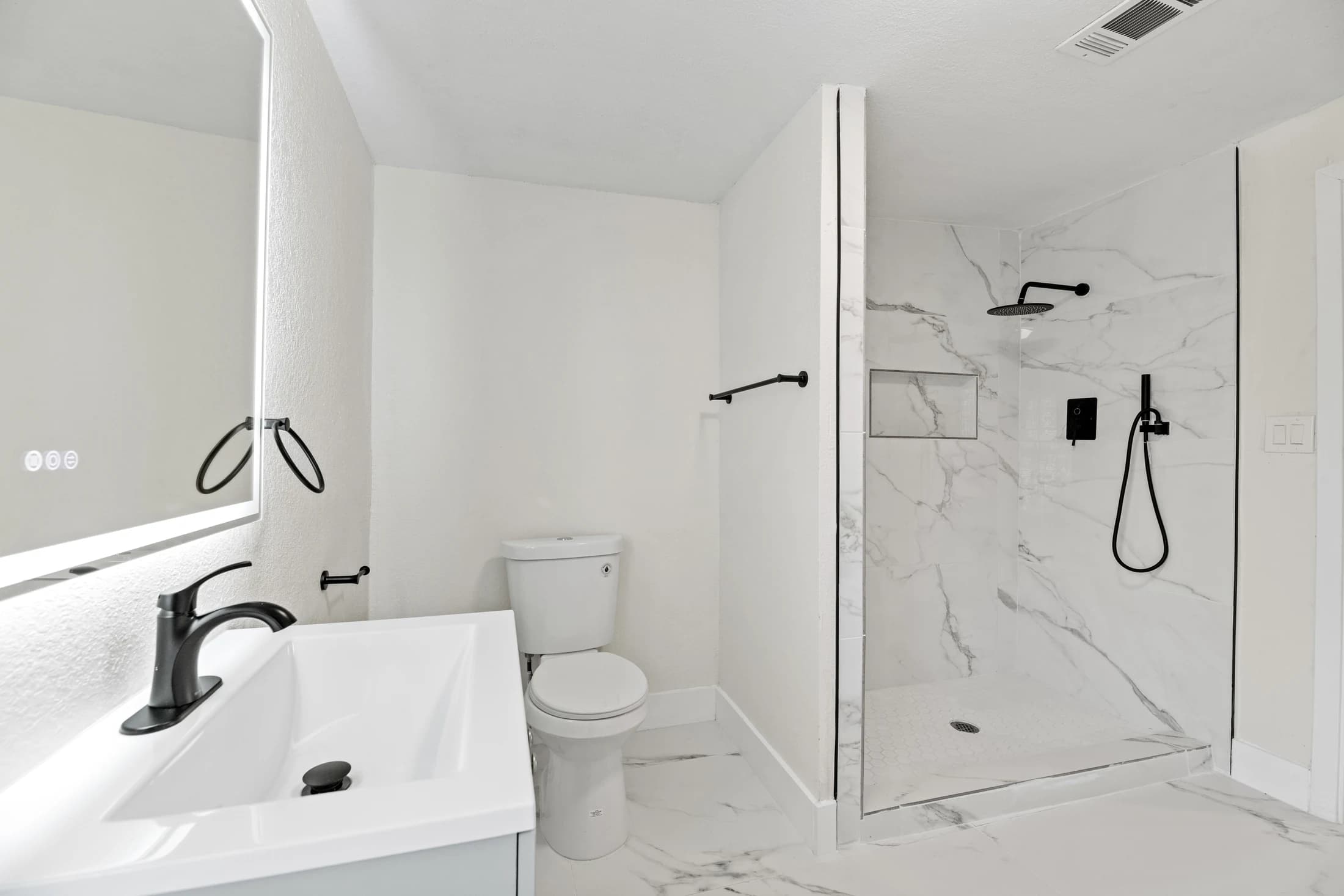
An inspiration photograph can show material and proportion, but it rarely explains ventilation, utility access, or cleaning. Use images to communicate a direction, then ask what the room needs to function in everyday use.
List the current issues separately from the desired appearance. Lingering humidity, condensation, inconvenient storage, and awkward access are useful observations to bring into planning. They should not disappear from the discussion once tile selection begins.
Make moisture management part of the brief
The EPA identifies moisture control as central to controlling indoor mold growth. In a bathroom remodel, this supports an early conversation about leaks, ventilation, and the existing room condition rather than simply covering visible symptoms.
Do not assume a new fan or finish alone resolves an existing problem. Assess the source and identify the appropriate specialist where needed. The remodeling scope should be clear about what is being changed and what is outside the work.
Set clear responsibilities
Identify who assesses existing conditions, who performs any required specialist work, and what should be checked before surfaces are closed or covered. Keep those responsibilities in the project record.
Painting and drywall can be included when needed within the larger bathroom remodeling scope. They are not standalone services; define and schedule any included work alongside the other bathroom tasks.
A few more answers
Will new tile solve an existing moisture problem?
New tile does not identify or correct the source of moisture by itself. Investigate leaks, ventilation, and the relevant assembly before installing finishes.
Further reading
Explore the next step
Learn about bathroom remodeling, or find your DFW service area.
This planning guide was prepared with AI assistance. It provides general homeowner information, not a property inspection, quote, or project-specific specification. Product instructions and the assessed conditions should guide actual work.