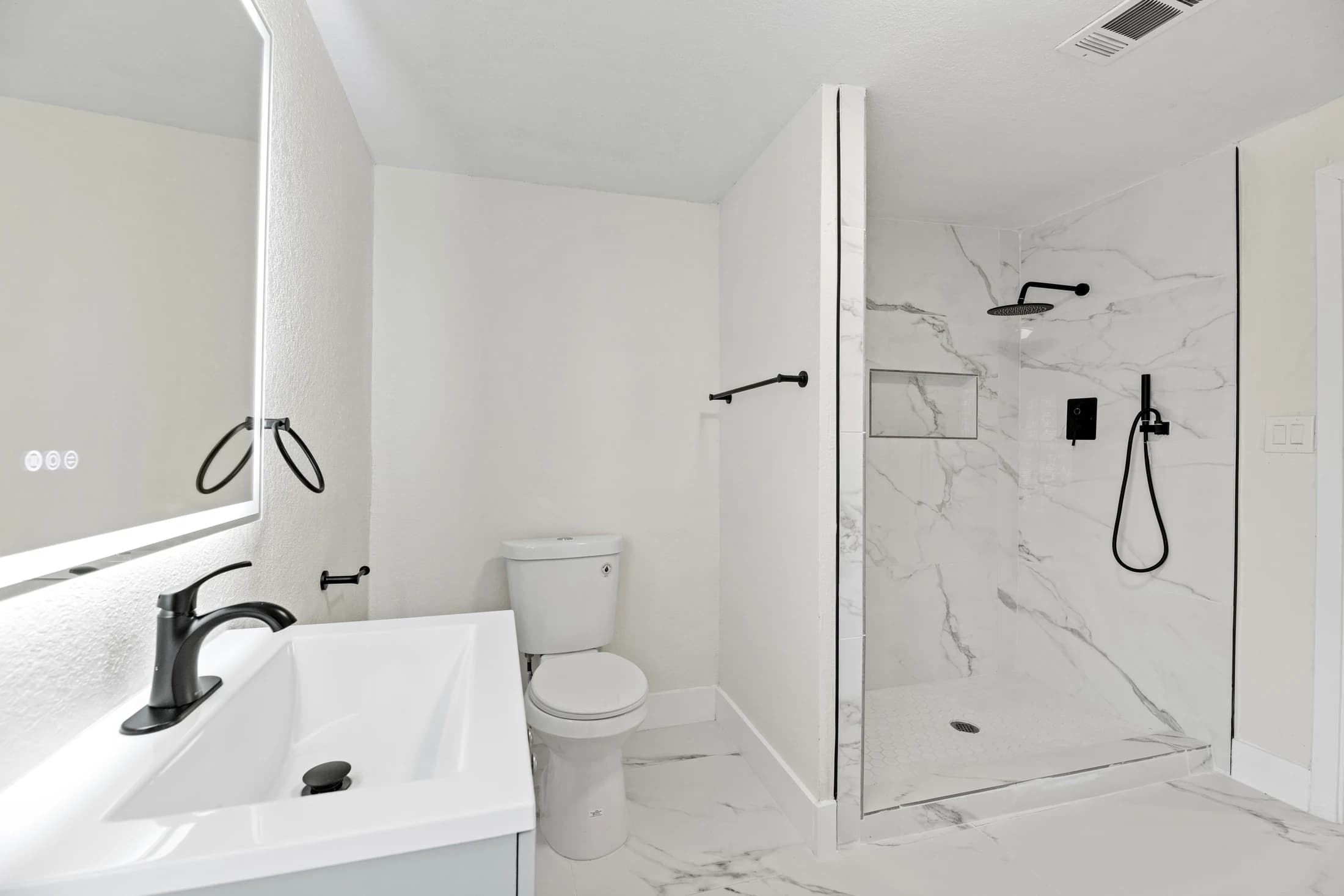
Ask the independent contractor to identify the proposed waterproofing assembly, the instructions that apply to it and how its connections will be checked before tile is installed. Record who handles product compatibility, required inspections and testing, and what documentation you will receive. A tile selection or a progress photograph is not a substitute for that review.
Ask for an assembly, not just a product name
A proposal that says waterproof the shower leaves useful questions unanswered. Ask what will be used at the base, walls and drain, and how the selected products form the proposed assembly. Keep exact product names and current instruction references together rather than relying on a color, a brand logo or an informal description of the work.
For a Dallas–Fort Worth homeowner, the goal is a clearer scope conversation with the independent contractor. You are identifying responsibilities and missing decisions, not inspecting concealed work yourself. Ask the responsible professional which existing conditions remain unknown and when the proposed assembly can be confirmed.
Make the connections part of the written scope
The selected manufacturer’s instructions should guide the actual details. Schluter’s shower handbook addresses seams, penetrations, drains and horizontal surfaces as parts of its assemblies. That is a useful reason to ask about connections and interruptions in the waterproofing, rather than asking only which material covers the largest wall area.
List the features in your proposed shower: a niche, bench, curb, valve opening or other attachment may need a specific detail. Ask who selects and verifies the applicable treatment. Do not assume that a product from the same brand, or one described as waterproof, is automatically compatible with every other component. Request confirmation for the actual combination.
Use a scope-and-evidence record
Use the following record during the proposal discussion. A reference should point to a real product, drawing, instruction or agreed follow-up. If an answer is unknown, assign a person and a decision point instead of treating a blank entry as approval.
On a small screen, scroll sideways to read the reference and responsibility columns.
| Question | Reference to request | Responsibility to settle |
|---|---|---|
| Which assembly is proposed? | Exact products and current manufacturer instructions. | Who checks the combination against actual site conditions? |
| How does it connect at the drain? | The selected drain and applicable connection detail. | Who confirms compatibility and installation responsibility? |
| What happens at seams and openings? | Details for corners, joints, valves and other penetrations. | Who identifies every relevant opening before covering? |
| What about niches, benches or the entry? | The details applicable to those features in this design. | Who reviews changes to a feature or attachment? |
| What checks happen before tile? | Required inspections, testing instructions and planned sequence. | Who performs, records and resolves the result? |
| What records will be supplied? | Agreed product list, photographs and actual check records. | Who provides them and when are open issues closed? |
This record organizes a conversation. It is not an installation specification, inspection certificate or assurance of waterproof performance.
Distinguish waiting before a test from the test itself
Ask the contractor to distinguish product curing, the test procedure and any later return-to-use requirements. These are separate questions. Schluter describes a water test before tile and recommends a minimum wait after setting KERDI before starting it under the stated conditions. That recommendation does not establish the schedule for another waterproofing product.
LATICRETE’s waterproofing FAQ gives different flood-test waits for different products and conditions. The useful takeaway is to identify the exact product and applicable instructions, not to choose the shortest published time. Ask the contractor how manufacturer requirements and applicable local inspection requirements will be coordinated. This guide sets no universal test duration, cure period or inspection rule.
Agree what the records can and cannot establish
Ask for the documentation you want before the work is concealed. Agree which stages will be photographed, how the location is identified and who will retain the records. A photograph can help locate a detail later, but it does not establish every concealed condition, product thickness or compliance requirement. Avoid using a collection of images as a guarantee.
Likewise, ask for the actual result of a required check and how an unresolved issue will be handled. A scheduled test is different from a completed test. If a correction is needed, ask who documents it and what must be checked again before the next stage. The responsible professionals must determine the appropriate procedure.
Worked example: a changed niche needs a revised detail
Imagine a hypothetical homeowner who adds a shower niche after discussing the initial scope. Rather than treating it as only a tile-layout change, the homeowner asks the contractor which waterproofing detail applies, whether the selected assembly remains suitable and what needs to be recorded before covering the work.
The contractor’s proposed revision, responsibilities and any cost or schedule implications go into the current scope. The homeowner keeps the updated reference with the other project decisions. This illustrates a documentation process; it is not a RIQOL project story or a technical recommendation for constructing a niche.
Keep the review with the project documents
Keep the current assembly references, unresolved questions, check responsibilities and agreed records together. Return to the affected detail when a product, drain, feature or attachment changes. Ask what the change means before authorizing the dependent work, rather than assuming that an earlier general approval covers it.
RIQOL is developing a contractor-matching service. It does not perform remodeling, issue estimates or approve waterproofing designs and inspections. Use this record to prepare a focused discussion with the independent contractor and the qualified professionals responsible for your home.
A few more answers
Does choosing tile settle the shower waterproofing scope?
No. Ask for the proposed assembly, product instructions, connection details and check responsibilities separately from the finish selection.
Can a photograph prove that the shower is waterproof?
A photograph can document a visible stage or detail, but it cannot establish every concealed condition or replace the required professional checks.
Is there one flood-test waiting period for every product?
No. Identify the selected product and follow its applicable instructions and project requirements. Waiting before testing and the test duration are different matters.
What if the shower design changes after the scope review?
Ask the responsible professional to revisit the affected assembly details, checks and documents. Record the revised scope and implications before dependent work proceeds.
Further reading
Explore the next step
Learn about bathroom remodeling, or find your DFW service area.
This planning guide was prepared with AI assistance. It provides general homeowner information, not a property inspection, quote, or project-specific specification. Product instructions and the assessed conditions should guide actual work.