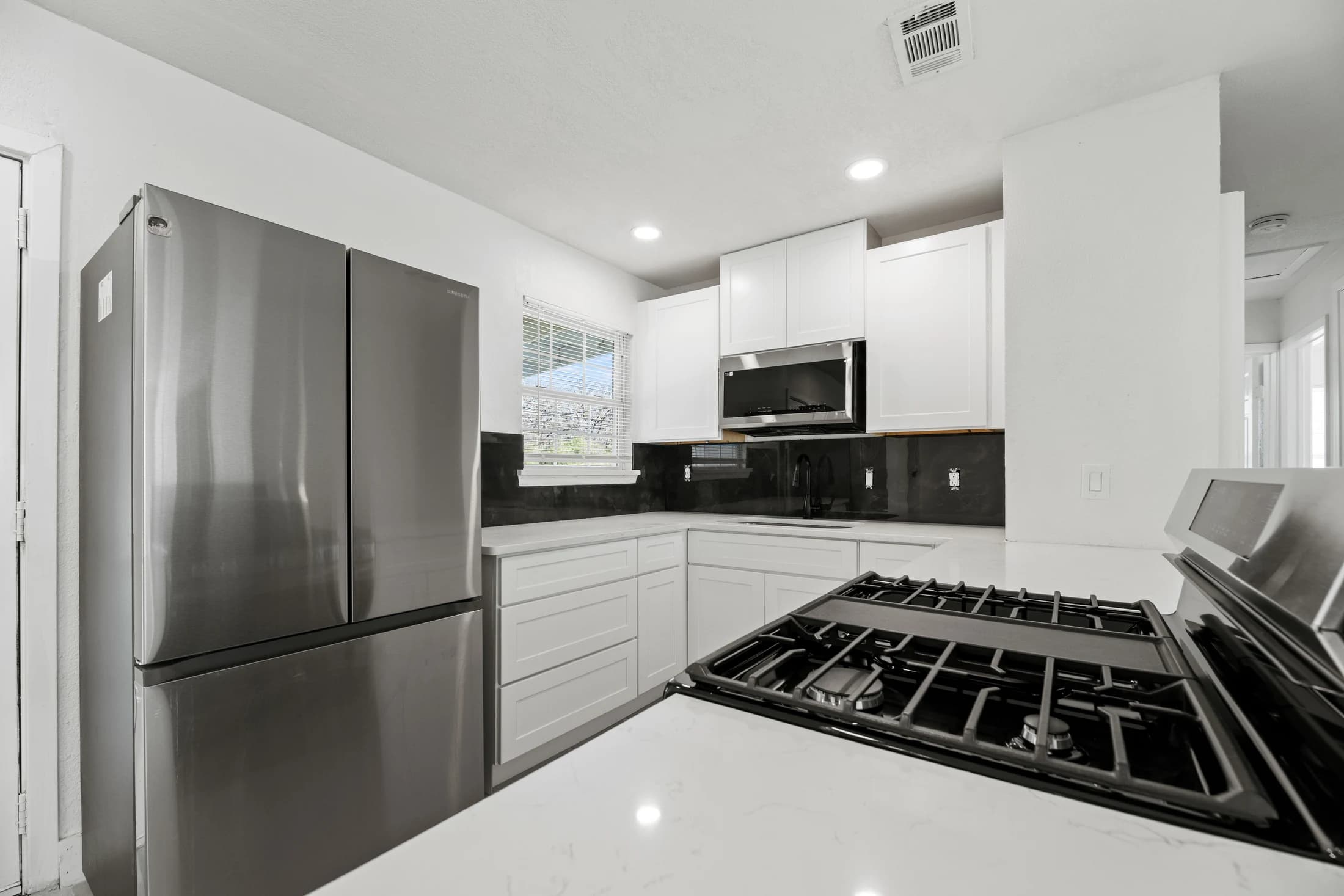
Quartz countertops are engineered products; quartzite is natural stone. Choose between specific products and slabs by checking their care instructions, appearance, fabrication details and complete installed estimate. Similar names do not mean identical performance, and neither material name alone determines the best fit for your kitchen.
First, confirm what you are comparing
For a Dallas–Fort Worth kitchen remodel, start with a written material identity rather than a photograph labeled white stone. The Natural Stone Institute explains that quartzite is a naturally occurring stone, while engineered quartz combines mineral particles with binding ingredients. The similar names describe different materials.
Ask the supplier to identify the proposed product or slab in writing. For engineered quartz, record the manufacturer, design and finish. For quartzite, record the supplier’s slab identification and material description. If two quotes use different names for what appears to be the same selection, resolve that difference before comparing totals.
A showroom label is a starting point for questions. You do not need to become a geologist or perform a destructive test at home. Ask the supplier or fabricator to explain how the material has been identified and which written care instructions apply to your purchase.
Natural Stone Institute: quartzite and engineered quartz explained
Match maintenance to your real routine
Cambria’s product-care guidance is a useful example of why the exact manufacturer matters: it recommends mild cleaning, does not require sealing its quartz surfaces, and calls for protection beneath hot cookware and heat-producing appliances. These are instructions for Cambria products, not a promise about every surface sold as quartz.
For a natural quartzite selection, get the fabricator’s advice on sealing and maintenance for that stone. Natural Stone Institute guidance notes that stone porosity varies and sealing can improve stain resistance. Do not turn that into a universal annual sealing appointment or assume a sealer makes a surface immune to damage.
Write down your kitchen routine before choosing. Where does a hot baking tray land? Does a countertop appliance stay out every day? Who cleans the counters, and which products are already in the cupboard? Bring those questions to the supplier and keep the approved care instructions with your selection record.
Review the whole surface, including its edges
A small sample helps you compare color beside a cabinet door. It cannot show how a larger pattern will meet at an island corner or where a seam will fall. Ask to see the proposed slab or an appropriate full-slab representation, and distinguish a preview from the actual material reserved for your project.
Mark the main viewing positions on a simple room sketch: the entry, the living-room view and the place you normally sit. Then ask the fabricator to show the planned cuts, seam locations, sink opening and edge treatment. This is a review exercise, not a fabrication drawing that replaces professional measurements.
Photograph your approved selection record and note what remains undecided. If the chosen material changes later, revisit the layout and care instructions rather than keeping approval of a different slab on file.
Compare two estimates on one common scope
A lower countertop total is difficult to interpret if the two estimates include different work. Use the same kitchen sketch, sink selection and requested edge when asking for a comparison. Keep material decisions separate from open site questions so neither becomes an invisible assumption.
The following checklist is an original planning aid. It does not prescribe a price, structural support detail or installation method. The responsible fabricator and project team should fill in the product-specific answers.
- Material: manufacturer/design or identified slab, finish, thickness and selection status.
- Layout: approved areas, seam discussion, pattern direction and any backsplash or waterfall panels.
- Cutouts: selected sink, faucet and appliance information, including who confirms final dimensions.
- Preparation: removal, disposal and assessment of the existing cabinet support.
- Installation: templating, fabrication, delivery, installation and responsibility for reconnections.
- Exceptions: allowances, exclusions, change approvals and care or warranty documents.
A worked decision example: the same kitchen, two incomplete proposals
Imagine a household comparing option A, a named engineered-quartz design, with option B, a particular quartzite slab. This is a hypothetical planning example, not a RIQOL customer story or a pricing comparison.
Option A includes removal and a sink cutout, but the proposed seam has not been discussed. Option B shows a preferred pattern layout, but removal and reconnection responsibilities are unclear. Neither proposal is ready for a fair total-price comparison. First ask A for the layout review and B for the missing scope.
Next, the household records two preferences: a calmer pattern at the island and a care routine that everyone will follow. They review those preferences against the actual selections, then compare the completed estimates. The useful outcome is a documented decision with fewer unknowns, rather than declaring one material the winner for every home.
Bring a short selection brief to the kitchen conversation
Keep the brief to one page: your two specific choices, what you like about each, the daily routine you want to support, and the questions still open. Attach the product or slab reference, care guidance and matching estimates. This gives the team a concrete starting point.
If cabinets are also part of the remodel, distinguish selecting a surface from approving final fabrication dimensions. Coordinate the countertop decision with the cabinet and sink plan, and ask the team when each approval is needed. You can explore the look early while keeping final measurements tied to the actual installation sequence.
A few more answers
Are quartz and quartzite the same countertop material?
No. Engineered quartz is a manufactured surface, while quartzite is natural stone. Identify the exact product or slab and use its applicable care and installation guidance.
Does every quartzite countertop need the same sealing schedule?
Do not assume one schedule applies to every stone. Ask the supplier or fabricator for written guidance for the selected slab, finish and sealer, including how to assess whether maintenance is needed.
Which is cheaper: quartz or quartzite?
A material category alone cannot answer that for your kitchen. Compare the specific selections on the same layout and installed scope, including removal, edges, cutouts, installation and exclusions.
Can a small sample confirm the final countertop appearance?
It can help with color and finish selection, but review the larger slab or design representation and proposed layout separately. Record what has been approved and what still needs confirmation.
Further reading
Explore the next step
Learn about kitchen remodeling, or find your DFW service area.
This planning guide was prepared with AI assistance. It provides general homeowner information, not a property inspection, quote, or project-specific specification. Product instructions and the assessed conditions should guide actual work.